What metadata actually is
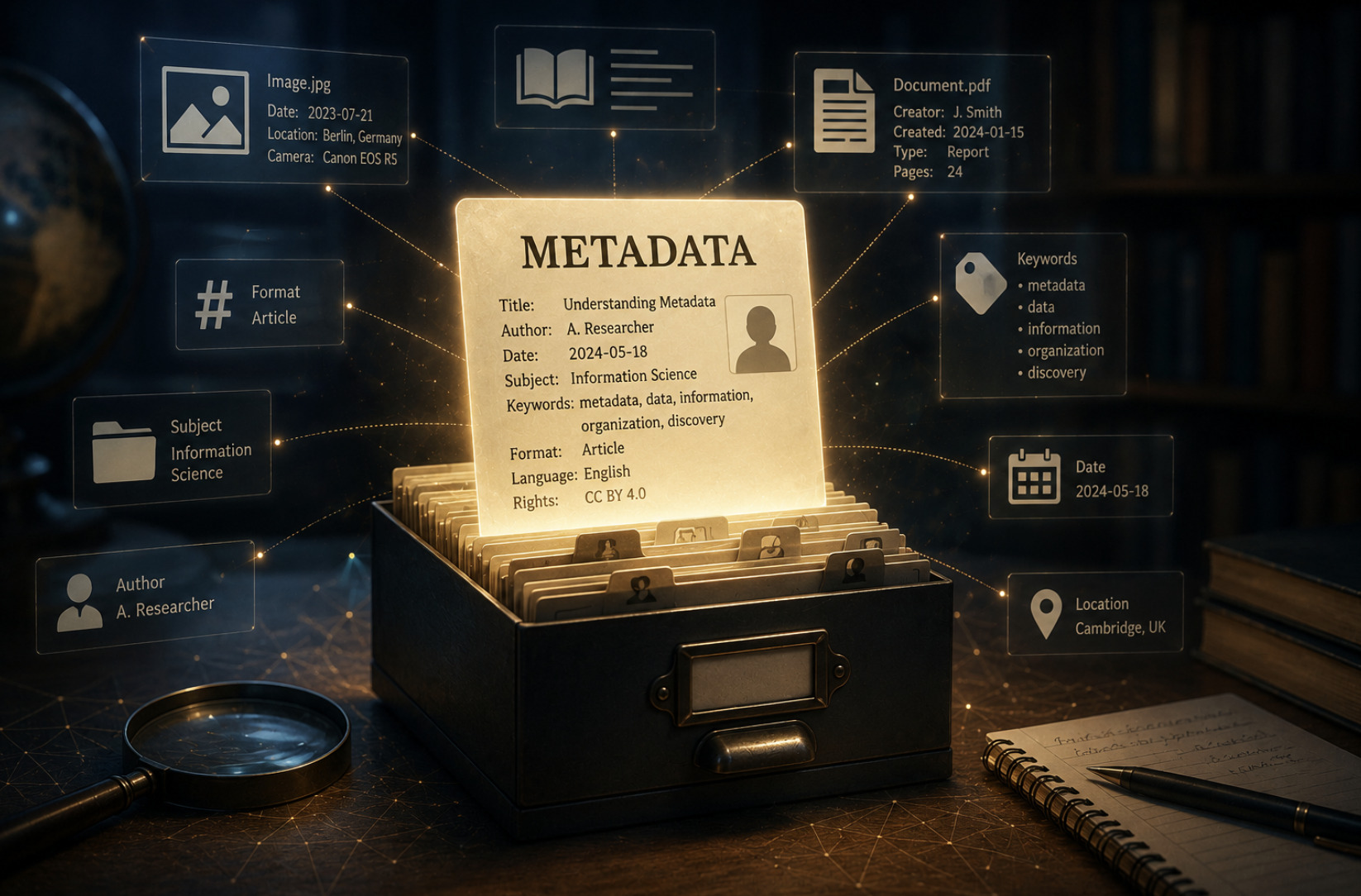
The simplest way to understand metadata is through its definition: it is data about data. If the "data" is a book, a photograph, a document, or a video, then the "metadata" is the information that describes it — its title, its creator, when it was made, what it's about, what format it's in. This descriptive layer sits alongside the actual content and tells you the essential facts about it without your having to examine the content itself. When you look at a library catalog entry and learn a book's author and subject before ever opening it, you are using metadata.
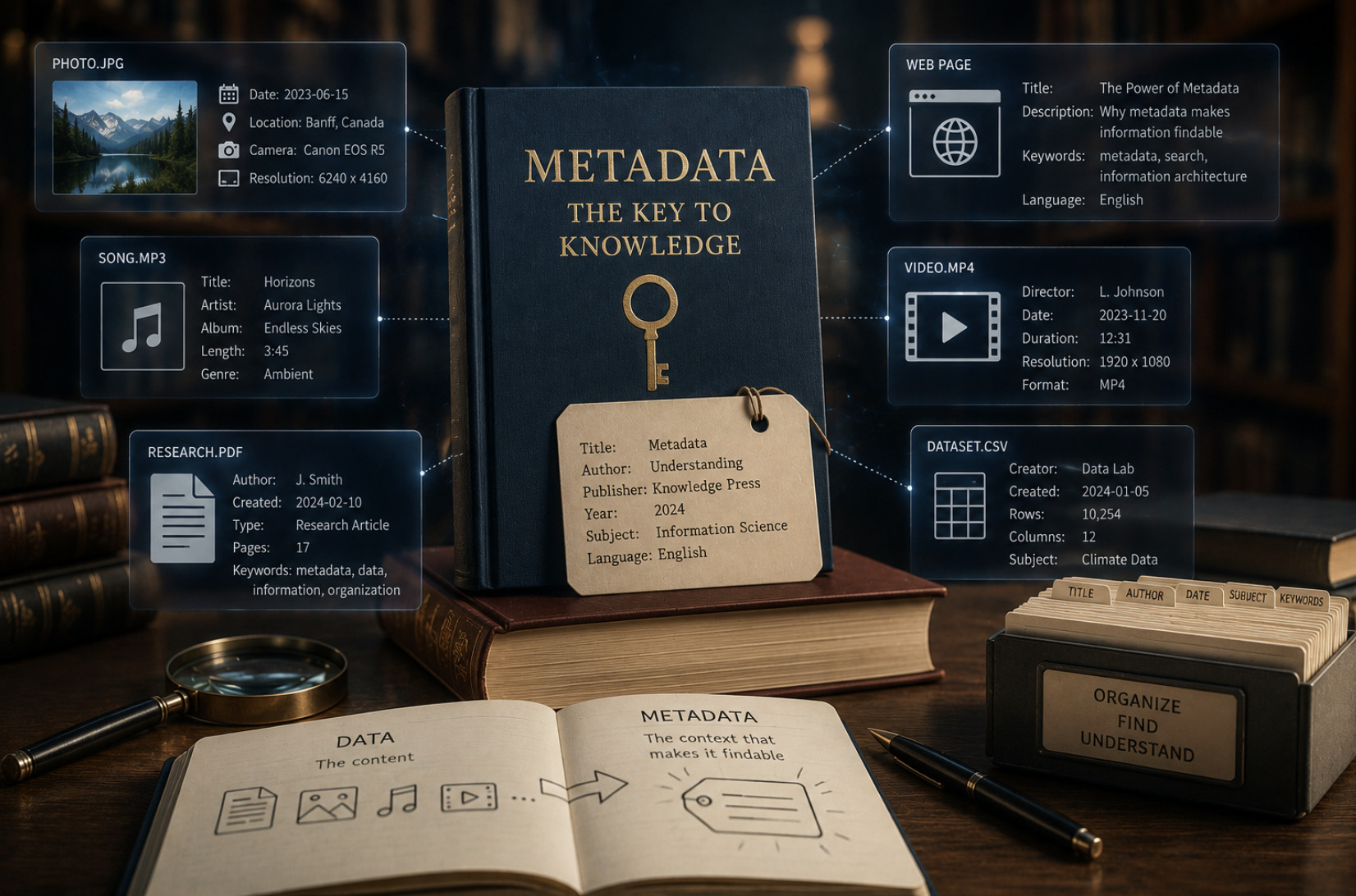
This might sound abstract, but it is something everyone interacts with constantly, usually without realizing it. The details attached to the photos on your phone — the date they were taken, where, on what device — are metadata. The information a music app shows about a song — artist, album, length — is metadata. The description and keywords that help a web page appear in search results are metadata. In every case, this data-about-data is doing the essential work of describing content so that it can be identified, sorted, and found. The content is what you ultimately want; the metadata is what makes it possible to get to that content in the first place. It is the label on the box, the entry in the catalog, the tag that lets a machine know what it's looking at.
Why metadata is essential
The importance of metadata becomes obvious the moment you imagine its absence. Consider a library with millions of books but no catalog, no labels, no organizing information of any kind — just books piled without order. The knowledge would all be there, but it would be effectively useless, because no one could find anything. This is exactly the role metadata plays: it is what makes large collections of information navigable. It allows content to be searched, sorted, filtered, and retrieved, turning an undifferentiated mass into an organized, usable resource. Without it, even the most valuable information is lost in the pile.
This is why metadata is the foundation of digital libraries and search systems. When you search for something and get relevant results in an instant, you are relying on metadata that describes and categorizes the content so the system can match your query to what exists. When you filter a collection by date, author, or topic, you are using metadata. The ability to find the right piece of information among enormous quantities — the single most important function of any library or search system — depends entirely on good descriptive data about that information. Content and metadata are partners: the content holds the value, but the metadata unlocks it, and unlocking it is what separates an accessible archive from an inaccessible heap. In the digital world especially, where the quantities are staggering, findability is everything, and metadata is what makes findability possible.
The different kinds of metadata
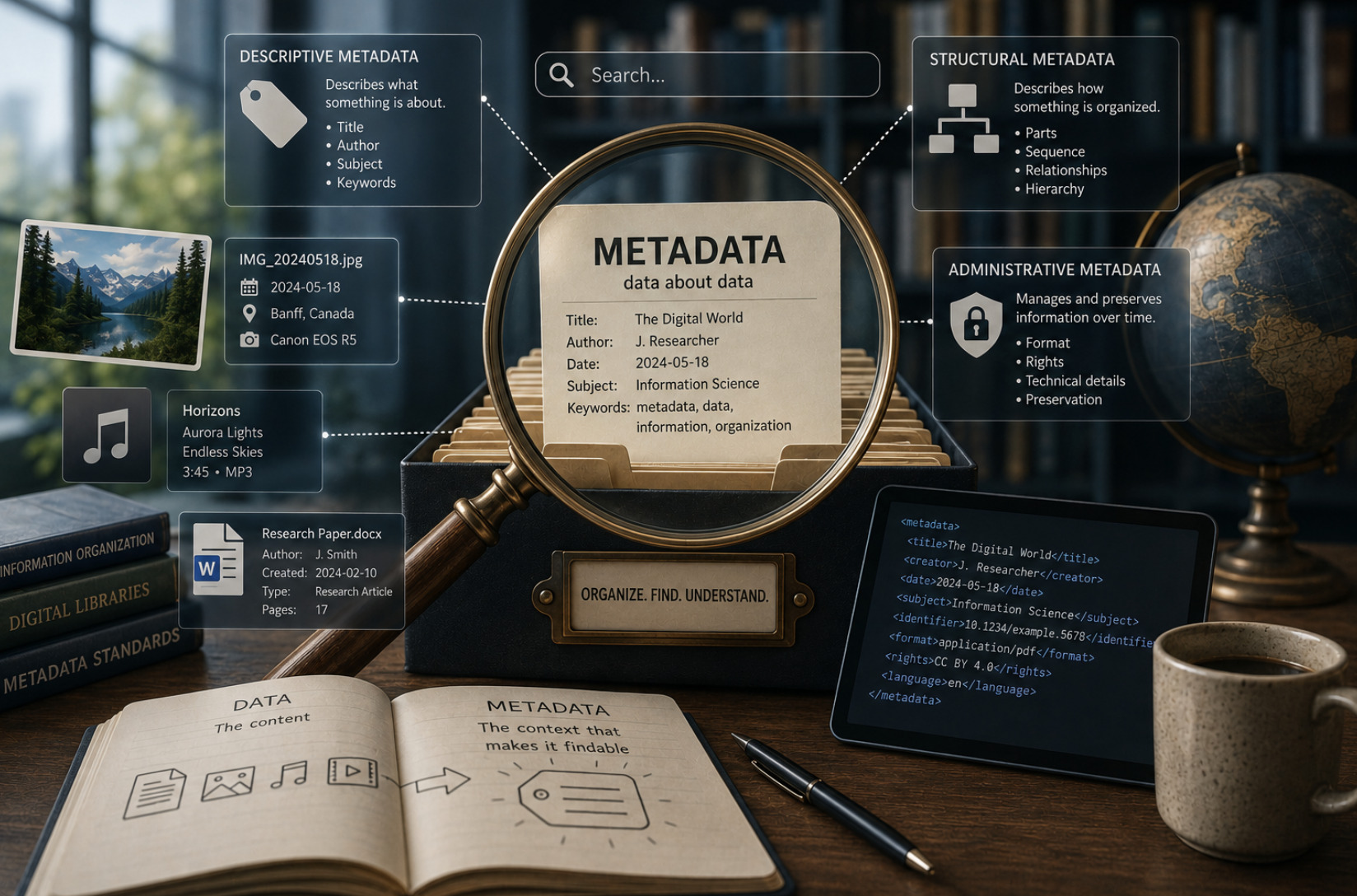
Metadata isn't a single thing; it comes in several types that serve different purposes, and knowing them clarifies how information systems work. The most familiar is descriptive metadata, which describes what a resource is and what it's about — title, author, subject, keywords — and is what enables searching and identification. This is the metadata that helps you find a specific book or discover content on a topic, and it's the kind most people picture when they think of a catalog or a search.
But there are other essential kinds working behind the scenes. Structural metadata describes how a resource is organized — how the pages of a document relate, how the parts of a complex object fit together — so that it can be navigated and displayed correctly. Administrative metadata handles the practical management of a resource: technical details about its format, information about rights and permissions, and the data needed to preserve it over time. Each type does a distinct job, and together they make content not just findable but usable, manageable, and preservable. This last function connects metadata directly to the long-term survival of digital information, a challenge we explored in why digital information is more fragile than paper: without administrative and technical metadata recording what a file is and how to read it, preserving digital content over time becomes nearly impossible. Metadata isn't only how we find things now; it's part of how we keep them readable in the future.
Why good metadata is hard
Given how essential metadata is, it might seem like a simple matter of filling in some fields — but creating good metadata is genuinely difficult, and understanding why explains a lot about the quality of the systems we use. The first challenge is consistency. For metadata to work well across a large collection, it needs to follow shared standards and conventions, so that the same kind of information is described the same way everywhere. Without agreed standards, one item's "author" might be another's "creator," dates might be written a dozen ways, and subjects might be labeled inconsistently — all of which breaks the ability to search and sort reliably. This is why the field relies heavily on established metadata standards, and why maintaining them takes real effort and expertise.
The second challenge is that good metadata often requires human judgment and labor. Deciding what a resource is really about, choosing the right subject terms, describing it accurately and usefully — these are not always things that can be done automatically, and doing them well takes skill and time. Poor or missing metadata is one of the main reasons information becomes hard to find, even when it exists and is valuable. This is the quiet, unglamorous work behind every well-organized collection: the careful, consistent, standards-based description that most people never see but everyone depends on. When search works beautifully and you find exactly what you need, you're benefiting from metadata done well; when you can't find something that surely exists, poor metadata is often the reason. The invisibility of metadata is a sign of its success, but it can also cause its importance — and the work it requires — to be badly underestimated.
The unseen foundation
The deepest point about metadata is that it is foundational precisely because it is invisible. We notice content — the book, the photo, the article — and rarely think about the descriptive information that made it possible to find that content in the first place. Yet without metadata, the digital world's vast stores of information would be unusable, an ocean of content with no way to navigate it. Every time you find something quickly among millions of possibilities, metadata did the work, silently and reliably, and then got out of the way. It is the infrastructure of findability, and like most good infrastructure, it goes unnoticed until it fails.
For anyone who works with information — and increasingly that is everyone — understanding metadata changes how you see the systems you use every day. It reveals that organizing information is not an afterthought but the very thing that makes information valuable, because knowledge you cannot find is knowledge you cannot use. Digital libraries, search engines, archives, and even the apps on your phone all rest on this invisible layer of data about data. Appreciating metadata means appreciating the quiet, careful, essential work of description and organization that turns raw content into accessible knowledge. It is the backbone we never see, holding up nearly everything we do with information, and the better we understand it, the better we can build and use the systems that keep human knowledge findable.
Frequently asked questions
What is metadata in simple terms?
Metadata is data about data — descriptive information that tells you what something is, who made it, when, and what it's about. A book's title and author, a photo's date and location, a document's keywords: all are metadata that let content be found, organized, and understood.
Why is metadata so important?
Because it makes information findable. Without descriptive data, even valuable content is lost in an unsearchable heap — like a library with no catalog. Metadata lets content be searched, sorted, filtered, and retrieved, which is the core function of every digital library and search engine.
What are the main types of metadata?
The main types are descriptive metadata (title, author, subject — for finding and identifying), structural metadata (how a resource is organized — for navigation and display), and administrative metadata (format, rights, and preservation details — for managing and keeping content over time).
Why is creating good metadata difficult?
Because it requires consistency through shared standards and often depends on human judgment to describe content accurately. Without agreed conventions, searching breaks down, and choosing the right descriptions takes skill and time. Poor or missing metadata is a leading reason valuable information becomes hard to find.