What live dealer games are
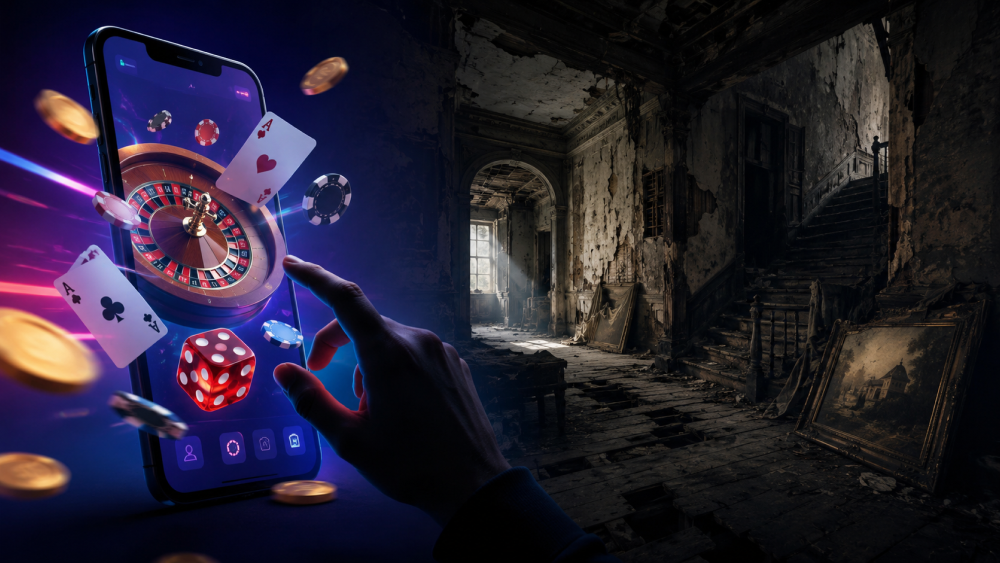
A live dealer game replaces the software-driven outcomes of a standard online game with a real, physical game run by a human dealer and streamed to the player. Instead of a random number generator deciding a card or a spin, an actual dealer deals real cards or spins a real wheel in a studio or a venue, and cameras broadcast it live. Players place their bets through the online interface and watch the genuine action unfold in real time, which recreates much of the atmosphere of a physical casino while keeping the convenience of playing from anywhere. The appeal is authenticity: you see the real cards, the real wheel and a real person, which builds a sense of trust and presence that software alone can struggle to match.
This blend is precisely what makes live dealer games popular. They answer a limitation of purely digital play — the absence of a human, tangible element — without giving up the accessibility that makes online gaming convenient in the first place.
The streaming backbone
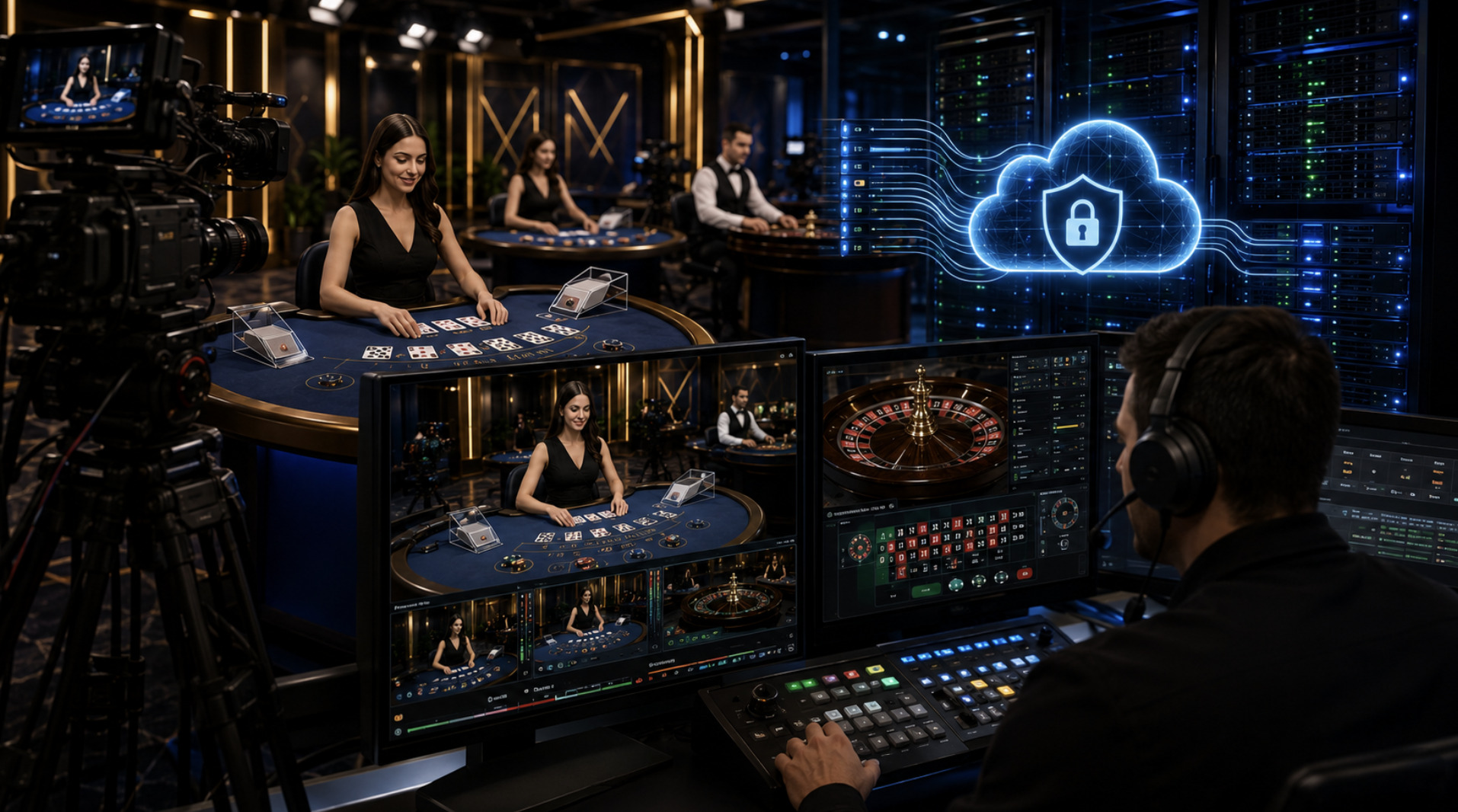
At the heart of live dealer technology is real-time video streaming. Multiple cameras capture the table from different angles, and the footage is compressed and delivered to players with very low latency, so that what they see is closely synchronised with what is actually happening at the table. Low latency is essential here — any noticeable delay would break the sense of live, responsive play and could interfere with the timing of bets, which must be placed within defined windows. Delivering smooth, high-quality video to many players at once, across a range of devices and connection speeds, is a serious engineering task, and it is the foundation on which everything else is built.
Providers that specialise in live gaming run dedicated studios designed specifically for broadcast, and operators integrate those feeds into their own platforms. In practice this means that sites offering live games — platforms such as Crazy Tower Casino and other regulated operators — connect to provider studios rather than filming the games themselves, drawing on infrastructure purpose-built for reliable, low-latency streaming.
Turning the physical table into data
Streaming the video is only half the challenge. The system must also know precisely what is happening at the table and convert it into digital information the platform can process, so that bets are settled correctly and instantly. Two key technologies make this possible.
The first is the Game Control Unit (GCU). Associated with each table, it manages the game and encodes the video, acting as the bridge between the physical table and the digital platform. It is one of the most important pieces of hardware in the whole setup, coordinating the timing of the game and the broadcast.
The second is Optical Character Recognition (OCR). OCR "reads" the physical events at the table — the cards dealt, the number the roulette ball lands on — and converts them into data the system records and displays to players in real time. This translation must be flawless, because an error in reading a card or a result would directly affect the game's outcome. The accuracy demanded here is absolute; there is no room for a misread, which is why the technology is rigorously implemented and monitored.
Together, the GCU and OCR ensure that the physical event at the table and the digital record on the platform stay perfectly aligned at every moment.
Studios, dealers and integration
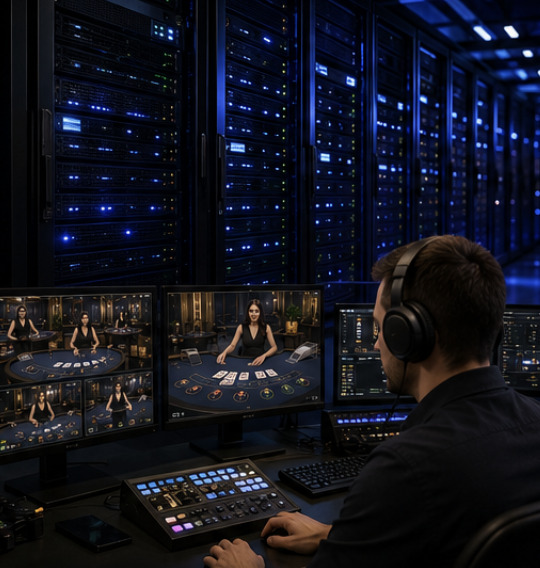
Around the core technology sits a substantial physical and human operation. Providers run purpose-built studios with tables, professional lighting and multiple cameras, staffed by dealers trained not only to run the game correctly but to perform on camera — maintaining rhythm, clarity and presence for an audience they cannot see. These studios frequently operate around the clock, which places heavy demands on reliability and redundancy, since a technical failure would interrupt live play for many players at once.
On the operator's side, the live game is integrated into the platform through interfaces that handle player authentication, bets, balances and the recording of every action, so that the live feed and each player's account stay perfectly in step. The reason the experience feels so effortless to the player is precisely that so much coordination — between studio, streaming infrastructure, data systems and the operator's platform — happens invisibly in the background. What reaches the player is a simple, smooth stream of a real game; what makes it possible is a considerable orchestration behind the scenes.

Fairness and trust in live games
Because live dealer games use real, physical equipment rather than a random number generator, their fairness rests on the integrity of the physical process — the shuffle, the deal, the spin — conducted under strict procedures and constant monitoring. This is a different basis for fairness than a certified RNG, but it is no less rigorous. Every stage of the game is recorded, and the combination of live video, OCR data and detailed logs makes the entire game traceable, which supports both regulatory compliance and the resolution of any dispute that might arise.
For players, this transparency is part of the appeal. You can watch the game happen with your own eyes, seeing the cards dealt and the wheel spun in real time, and regulated operators run these games under standards that hold the process accountable. It is, in a sense, fairness you can see for yourself, backed by verifiable records rather than taken purely on trust. That visibility is one of the reasons live dealer games have won over players who prefer the reassurance of a real, observable process.
The most popular live dealer games
Live dealer technology is applied most often to the classic table games, because those are the ones whose appeal depends on a real dealer and a shared, observable process. Live blackjack lets players take decisions hand by hand against a real dealer, with the social element of a shared table. Live roulette streams a real wheel and ball, so players watch the genuine spin decide the outcome. Live baccarat, a favourite in many markets, translates naturally to the format because it is simple to follow on screen. Alongside these, providers have developed live game-show-style titles that blend a physical wheel or device with interactive, broadcast-style presentation, aiming for entertainment as much as traditional play.
What unites these games is that the live format adds something the digital version cannot: the presence of a real dealer and the ability to watch the actual mechanism produce the result. For players who value that authenticity, the technology is not a gimmick but the whole point, turning an online session into something closer to sitting at a real table.
What you need to play, and the mobile experience
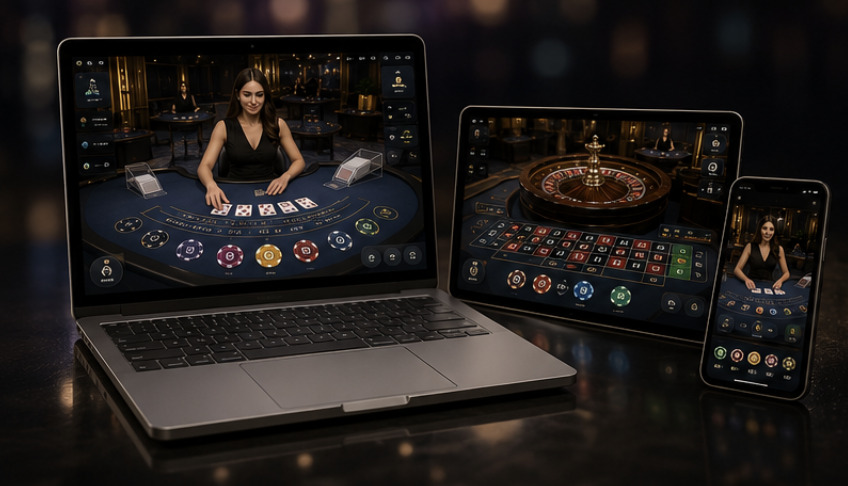
Playing a live dealer game requires little on the player's side beyond a reasonable internet connection and a device capable of streaming video — a phone, tablet or computer. Because the heavy lifting happens in the provider's studio and infrastructure, the demands on the player's equipment are modest, though a stable connection matters more than for a standard digital game, since the experience depends on smooth, real-time video. A weak connection can cause the stream to stutter, which is the main practical limitation players encounter.
On mobile, live dealer games are designed to work within the constraints of a smaller screen and a mobile connection, with interfaces adapted so that betting controls and the video feed coexist cleanly. Given how much online play now happens on phones, providers put considerable effort into making the live experience smooth on mobile, so that a player can join a live table from anywhere with much the same ease as on a desktop. The result is that the authenticity of a live table is now available in the pocket, not just at a computer.
The rise of live dealer gaming
It is worth stepping back to note why live dealer gaming has grown so much. For years, the main criticism of online play, compared with a physical casino, was that it felt impersonal — a solitary interaction with software. Live dealer technology directly answers that criticism, restoring the human presence and the observable, shared process of a real table while keeping the convenience of playing from anywhere. As streaming technology and studio production have improved, the experience has become smoother and more immersive, which has widened its appeal.
This is why live dealer games have moved from a novelty to a central part of many online casinos' offerings. They occupy a sweet spot between the accessibility of digital play and the atmosphere of a physical venue, and the technology behind them keeps advancing. For anyone curious about how the online and physical worlds of gaming are converging, live dealer games are the clearest example — a real casino table, streamed and made interactive, delivered to a screen in real time.
Live dealer versus standard digital games
It helps to place live dealer games alongside the standard digital ones to see clearly what the technology changes. In a standard online game, the outcome is decided by a certified random number generator, and fairness rests on independent testing of that software. In a live dealer game, the outcome is decided by a real physical process — a shuffle, a deal, a spin — and fairness rests on the integrity of that process under monitoring, with the whole thing recorded. Both are legitimate routes to a fair result; they simply arrive at it differently, one through tested software and the other through an observable physical event.
For the player, the practical differences are speed and atmosphere. Standard digital games are typically faster, since the software resolves each round instantly, and they run without the pacing of a human dealer. Live dealer games are slower by nature, moving at the rhythm of a real table, and they trade that speed for authenticity and a social feel. Neither is better in the abstract; the choice depends on whether a player values quick, solitary play or the presence and pace of a real table. Knowing that the two are decided by fundamentally different mechanisms — software randomness versus a monitored physical process — helps a player understand exactly what they are playing and where its fairness comes from.
Frequently asked questions
How do live dealer casino games work? A real human dealer runs a physical game — dealing cards or spinning a wheel — in a studio, streamed live to players who bet through the online interface. Technology like a Game Control Unit and OCR turns the physical action into real-time data.
What is OCR in a live casino? Optical Character Recognition reads the physical events at the table, such as the cards dealt or the roulette result, and converts them into digital data the platform processes and shows to players instantly. It must be extremely accurate, since it determines outcomes.
What is a Game Control Unit? A Game Control Unit is a device associated with each table that manages the game and encodes the video, acting as the bridge between the physical table and the digital platform. It is one of the most important pieces of hardware in a live setup.
Are live dealer games fair? Yes, when run by regulated operators. Fairness rests on the real physical process conducted under strict procedures and monitoring, and every stage is recorded through video, OCR data and logs, making the game fully traceable.
Why do live dealer games feel more real than standard online games? Because a real human deals real cards or spins a real wheel, streamed live, rather than a software generator producing the result. Seeing the genuine action unfold in real time gives a sense of presence and trust that purely digital games can lack.