What retrieval-augmented generation actually does
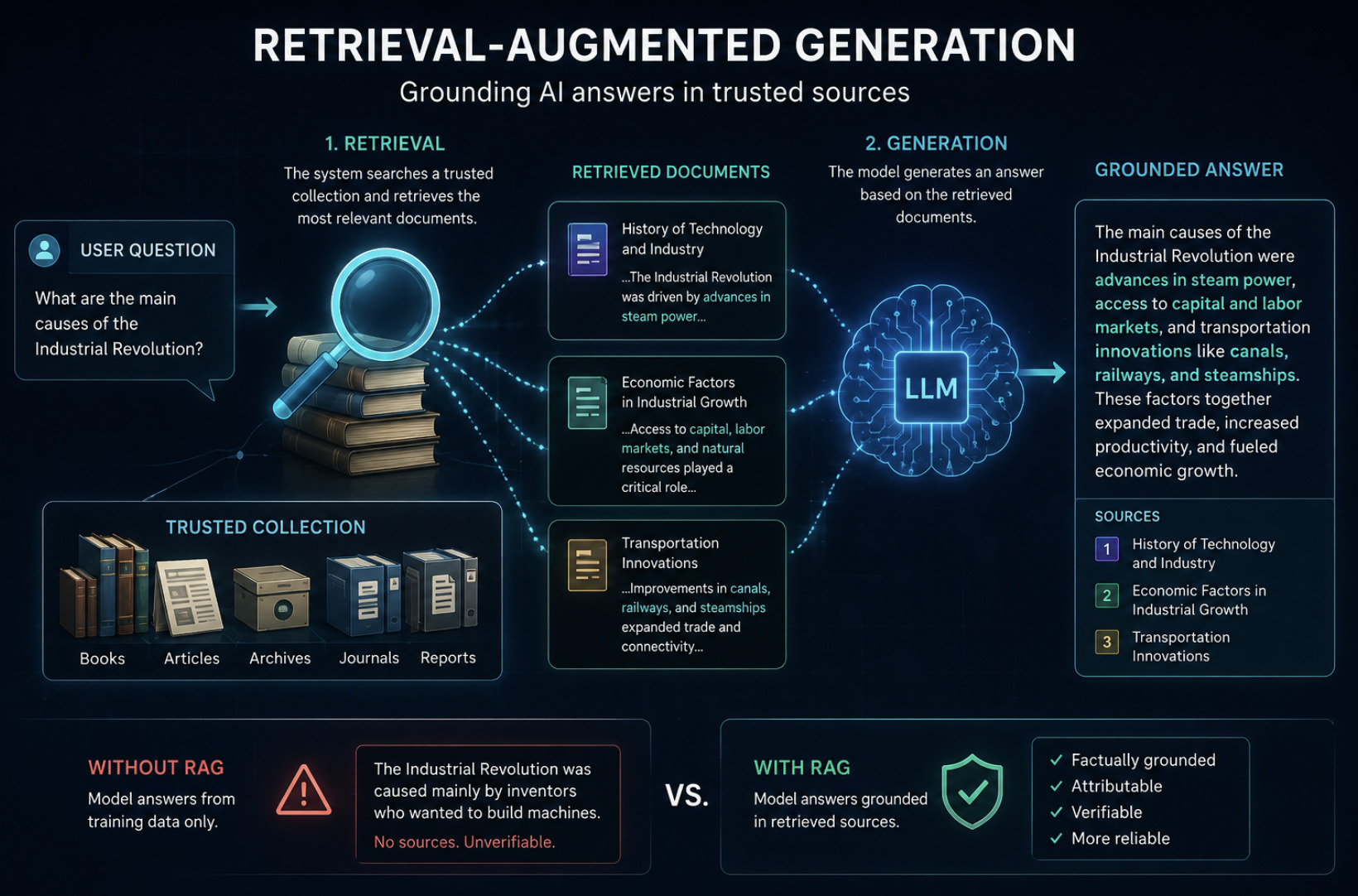
The appeal of a large language model is also its danger: it will answer almost anything, fluently, whether or not it knows. Left to itself, it draws on a statistical impression of its training data and can invent citations, facts, and sources with complete confidence. Retrieval-augmented generation, or RAG, is the architecture devised to tame this. Instead of letting the model answer from memory, the system first retrieves relevant documents from a defined collection, then instructs the model to compose its answer using those documents as grounding.
In a digital-library context, this is a profound shift. The collection becomes the model's evidence base; the model becomes the collection's interface. A reader no longer queries the catalogue and then reads the sources. They ask a question, the system finds the passages that bear on it, and the model synthesises a reply that — in principle — rests on the library's actual holdings rather than on the model's hazy recollection of the internet.
The genuine promise
It would be easy to dismiss this as a gimmick, and it is not. For a well-curated collection, RAG can do something libraries have always wanted and never quite delivered: meet a reader at the level of their question rather than the level of their search vocabulary. A novice does not need to know the right keywords, the controlled subject headings, or the structure of the archive. They can ask in plain language and receive an answer that draws the relevant material together — and, crucially, points to where it came from.
That last part is the whole game. A RAG answer that cites its retrieved sources turns the library's collection into something newly legible. The reader gets the synthesis and the provenance at once, and can follow the citation back to the original. Done well, it is not a replacement for the sources but a guide into them, the most capable reference librarian imaginable, available at any hour and tireless.
Where it quietly breaks
The trouble is that "done well" conceals a great deal of difficulty, and the failure modes are subtle precisely because the output is so fluent. The first problem is retrieval itself. If the system fetches the wrong passages, the model will faithfully and persuasively build an answer on the wrong foundation, and the reader has no easy way to tell. The polish of the prose hides the weakness of the evidence. A list of mediocre results announces its own uncertainty; a confident paragraph does not.
The second problem is the seam between retrieval and generation. Even when the right documents are fetched, the model may misread them, blend them with its own training-data assumptions, or smooth over a contradiction that a careful human reader would have flagged. The citation at the end of the sentence implies that the sentence faithfully represents the source. Often it does. Sometimes it quietly does not, and verifying the gap requires doing exactly the work the system was meant to spare you.
The provenance question becomes everything
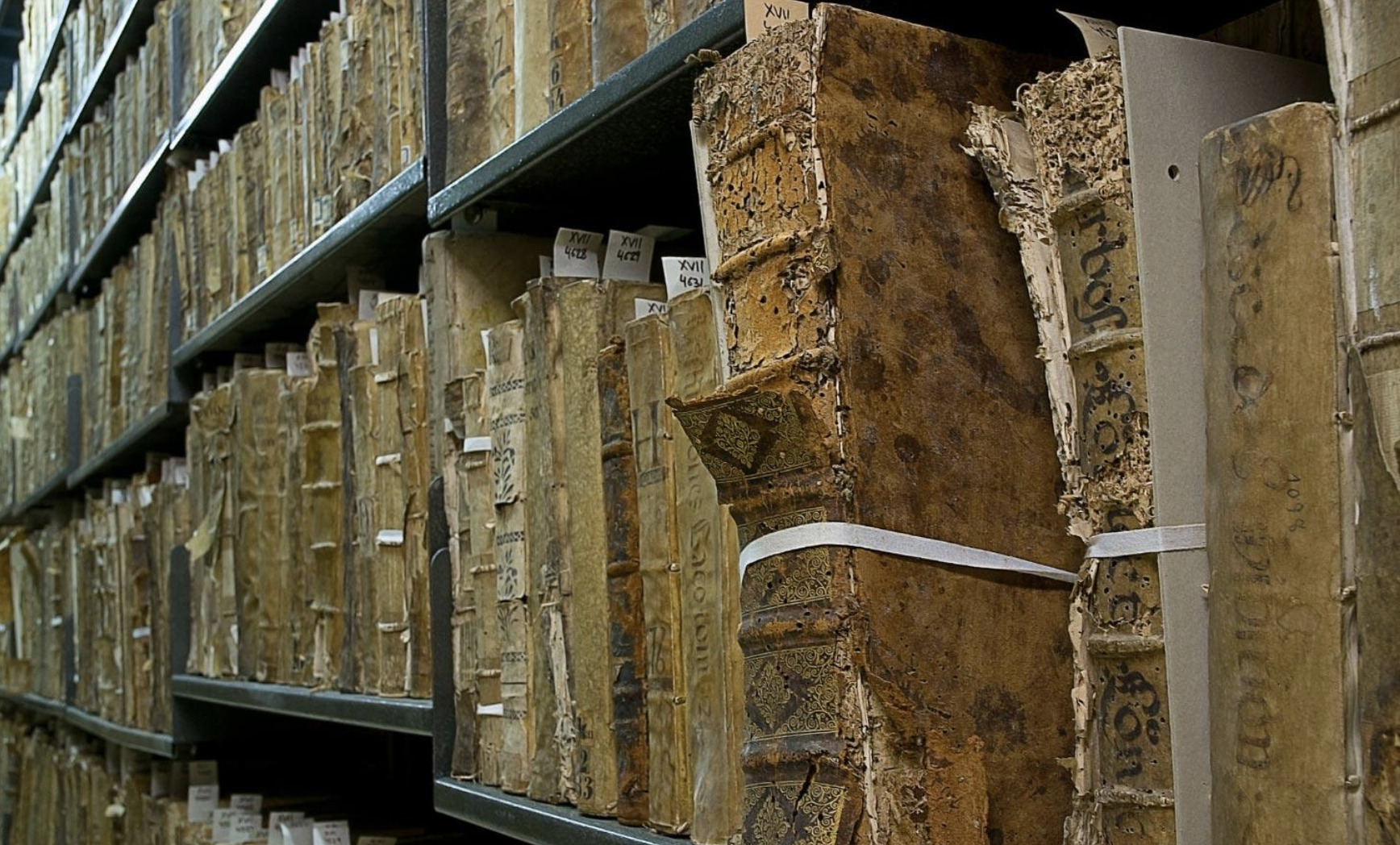
This is where the concerns of the digital-library community move from the periphery to the centre. In the old model, provenance was something a reader could always reconstruct: you knew which document you were reading. In the conversational model, provenance has to be engineered deliberately into the system, surfaced at every claim, and made trivially easy to verify — or it vanishes. An answer without traceable sources is not a library service at all; it is just a more articulate guess.
This gives institutions that maintain trustworthy, well-described collections a new and serious responsibility. The value they offer is no longer only the documents but the guarantee of grounding — the assurance that when the interface speaks, it is speaking from a known, curated, citable corpus rather than from the undifferentiated sludge of the open web. In an information landscape increasingly polluted by synthetic and unverifiable content, a collection that can stand behind its answers becomes more valuable, not less.
The catalogue was never neutral, and neither is this
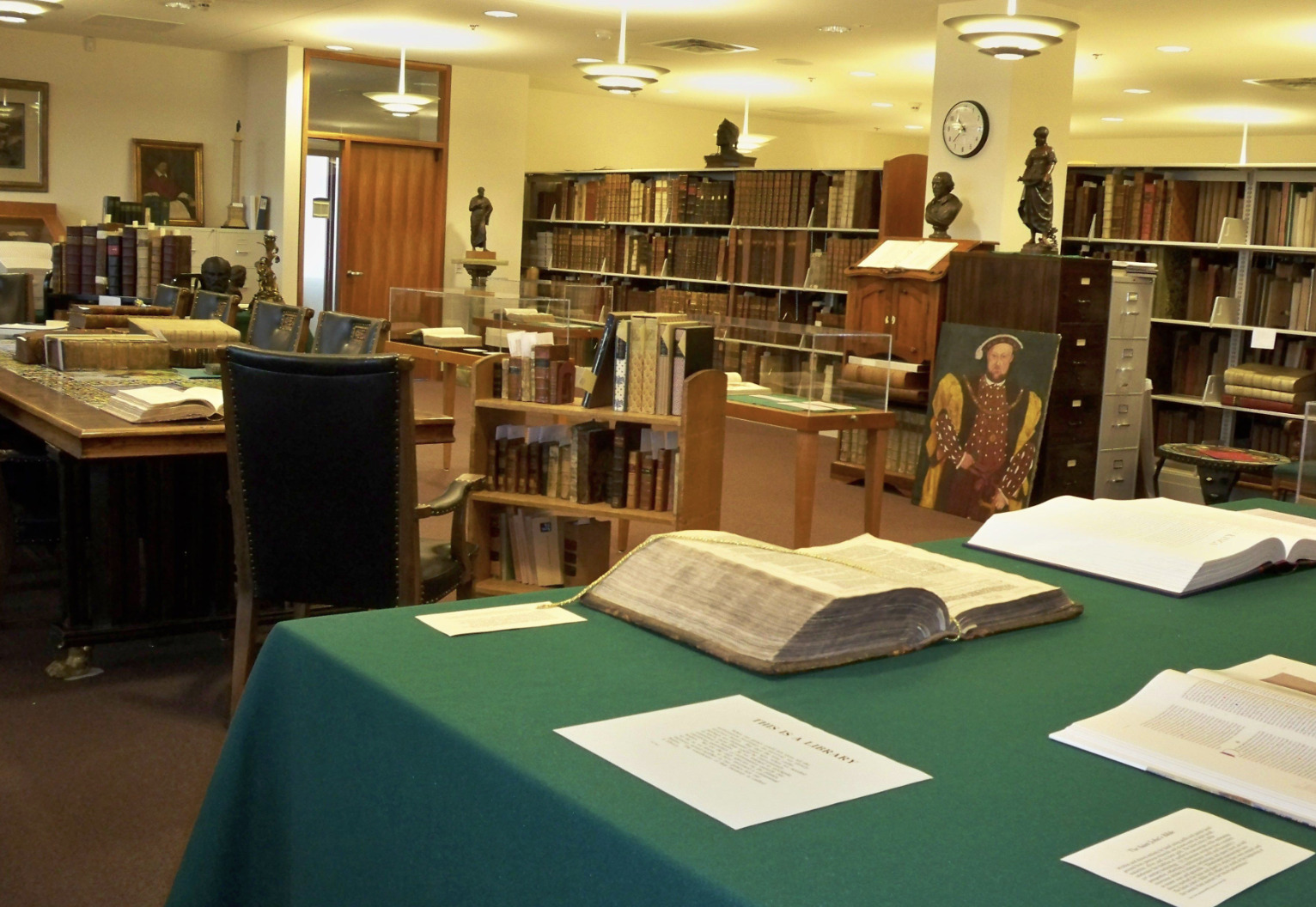
There is a final, uncomfortable truth worth naming. The list was never an innocent technology; ranking always embedded choices about what mattered. But the conversational answer hides its choices far more completely. When a system collapses a hundred sources into one paragraph, the decisions about what to include, what to omit, and how to frame the synthesis are made invisibly, on the reader's behalf, by a model whose reasoning cannot be fully inspected. The authority that once belonged to the reader's judgement is being transferred, quietly, to the interface.
This is not an argument against the technology, which is too useful and too inevitable to refuse. It is an argument for building it with the values libraries have always claimed: transparency about sources, humility about certainty, and a relentless insistence that the reader can always get back to the original. The chatbot may well become the catalogue. The question for the next century of digital libraries is whether it inherits the catalogue's discipline along with its convenience — or whether, in the rush to answer, we forget that the most important thing a library ever did was let you check for yourself.
Discover more in our comprehensive guide, where we explain the process in detail and highlight the most important points to consider.